


Asia Pacific’s (APAC) growing urban population coupled with low housing affordability continues to drive demand for rented property in key cities. Changing mindsets and policies around renting, and higher interest rates, further suggest APAC Living sectors could be a long-term, scalable opportunity.
The population in APAC cities has doubled in the last 15 years – through domestic urbanisation and immigration. It now houses 2.2 billion people. As at June 2023, the United Nations World Urbanisation Prospects expect it to grow by a further 50% by 2050.
“Until recently, most developers operated build-to-sell models, selling apartment units to individuals prior to completion, while renters have generally leased units from individual landlords. However, market dynamics are changing.”
M&G Investments
Since the pandemic, Governments have increased efforts to bring in international workers and students – to help reinvigorate economies and address labour shortages. In 2023, Australia increased its annual permanent migration cap by over 20% to 195,000 to attract skilled professionals into sectors such as healthcare, education, engineering and agriculture. International students are also returning – having grown steadily by 10-15% annually in the five years prior to the pandemic.
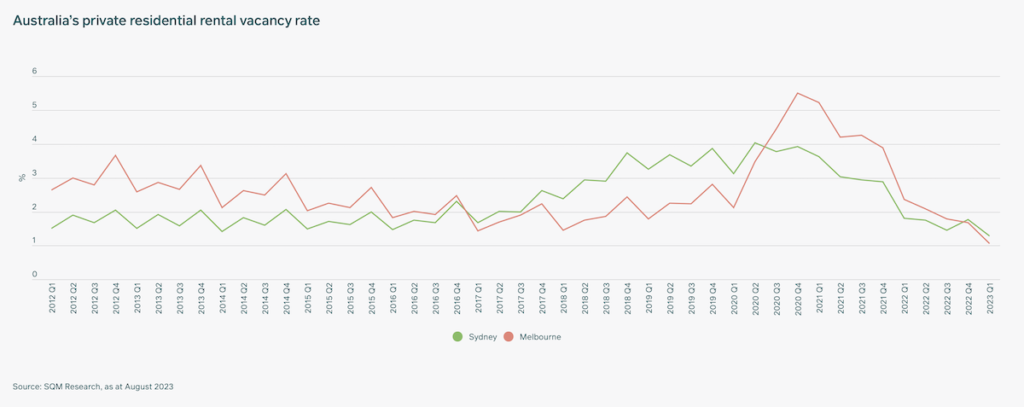
Supply has consistently lagged demand, with current vacancy rates below pre-pandemic levels. It now takes ten to 15 years of income to buy a home – making renting more feasible, especially for young professionals.
With an historic mindset leaning towards home ownership, Governments’ mindsets are shifting to tackle housing issues. In the last decade, the Australian Government increased stamp duty to reduce the number of individual landlords investing in residential – to manage price escalation. Promoting the growth of the rental sector is another strand of this.
More changes in Government policies and taxes in 2023 to incentivise the development of Build to Rent are signposts that the sector may develop into a deep, scalable sector suitable for institutional investment in the coming decades. Australia has reduced land and withholding taxes to encourage Build to Rent projects.
Australia’s Build to Rent market began to gain traction after stamp duty hikes for foreign buyers in 2019. This prompted developers to repurpose unsold apartments for rent. M&G Investments highlight that this opened up the market for institutional investment into newly completed and development Build to Rent projects.
According to M&G Investments, Australia’s deep rental pool is expected to expand because of favourable immigration policies and a recovery of international student demand. The company believes that there is significant headroom for the institutional rental housing sector to grow.
Over the next decade, M&G Investments believe that residential investments could grow 2.5x, potentially accounting for around 12-15% of total APAC investment volumes. As such, the company believes the living sector is likely to become a core, liquid asset class in the next decade.


