


Australia is in the midst of the worst housing crisis in decades. Fixing it largely comes down to supply. We’re also seeing apartment living become more attractive to a broader sphere of potential residents than ever before.
By Fraser & Partners
Whether they choose to rent or buy, how, as an industry will we create the housing people need and want? Housing that’s climate positive, meets the needs of a core millennial demographic, that contributes to communities and enhances our cities.
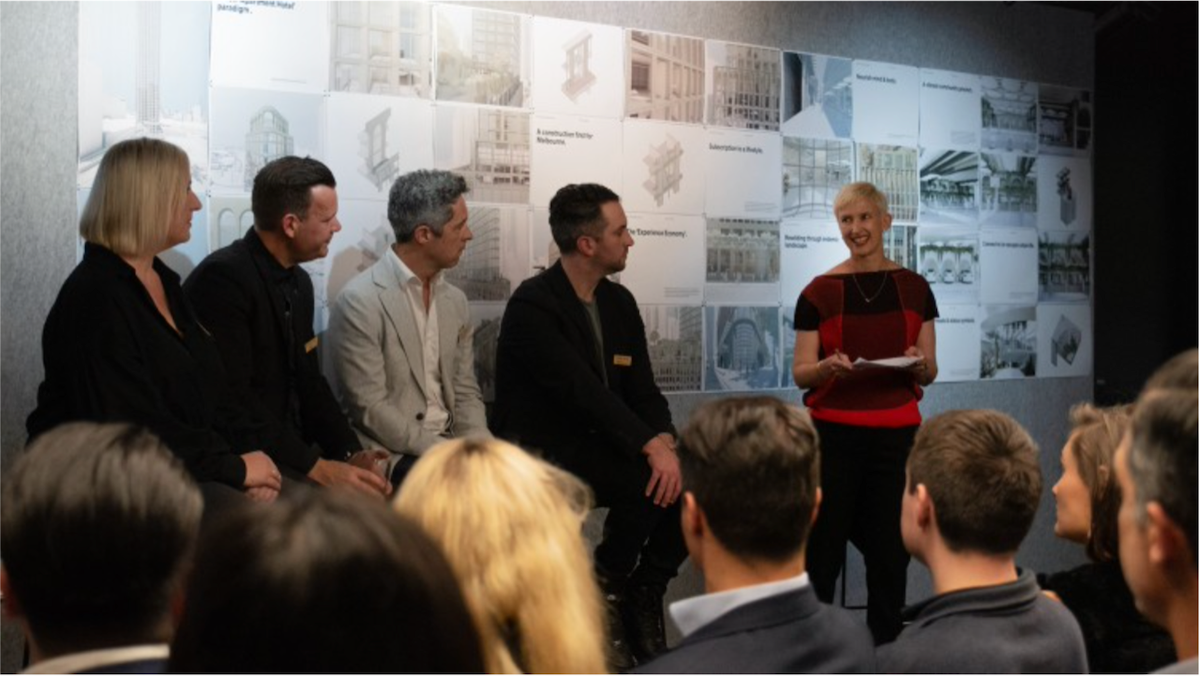
On 5 October, Fraser & Partners and ULI Australia co-hosted a panel discussion to explore these ideas, examining Build to Rent and build-to-sell through a new lens.
Reade Dixon, F&P Director kicked-off by presenting the current market state of play (did you know that metro Melbourne’s population is growing by 99,000 people per annum, and we’ll need around 1.6 million additional homes by 2051?).
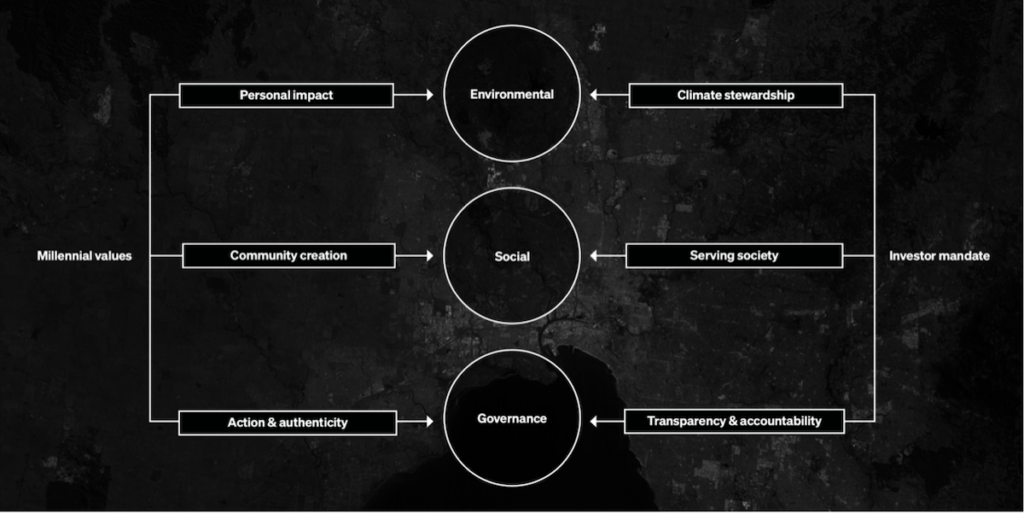
Reade then discussed the increasing ESG connection between millennial values – what they’re demanding – and global investor mandates – what they’re doing – and how this is influencing the design of new apartment developments. The results can only be beneficial; better housing that addresses the impacts of climate change while providing positive social and cultural outcomes.
“There’s a cultural shift …. led by millennial values and mandated by global investment.”
Reade Dixon, Director, F&P
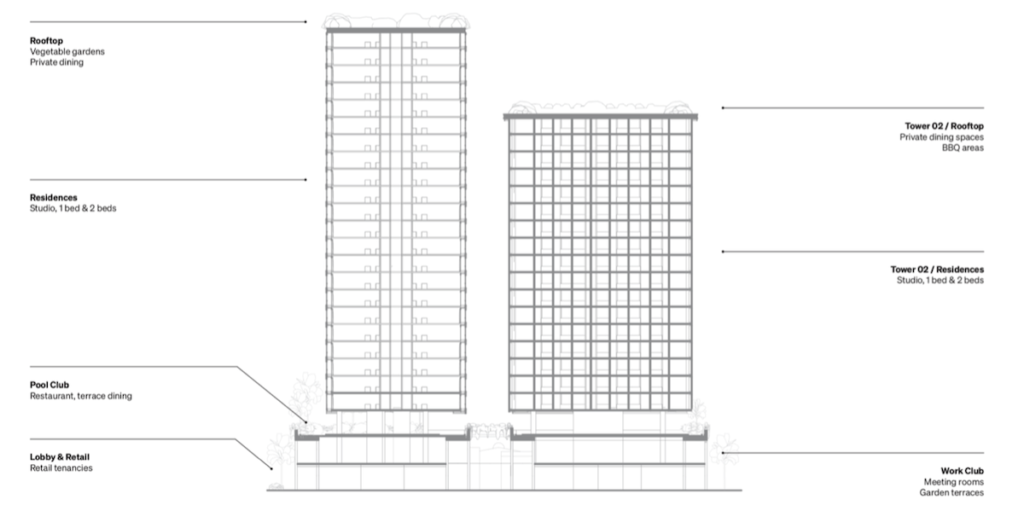
This led into a deeper look at two project case studies:
- Winn Street by Fraser & Partners (client: Sungard Property Group)
- The Queensbridge Building by Elenberg Fraser (client: Time & Place x Hickory)
Both are examples of our Build-to-Live thinking.
Alice Blackwood, Editor of INDESIGN Magazine, then moderated the panel discussion. Reade was joined by Anthony Nelson (Global Creative Director, ERA-co), Jeremy Quinn (Principal, Franklin St.) and Kate Dodd (Founder, Intent Strategy).
Following are some of the insightful takeaways shared by our panellists.
What are your observations on the behavioural shifts around the ways people want to live?
Kate explained what intrinsically motivates millennials and how these needs and desires are shaping many different sectors, from workplaces to housing. Both millennials and Gen Z have strong expectations of what community and togetherness mean, while diversity, equity and fairness are also major drivers: What does the future look like and how do we build it together?
Millennials aspiring to establish their own homes (the ‘Great Australian Dream’) is today overshadowed by a grim reality as the cost of living and housing crises coalesce.
As a Sydney-based millennial, Kate spoke about the escalating vacancy rates in NSW along with the very real threat of increased homelessness in the community.
“I’m very concerned about the ethics of living in a three-bedroom house by myself, which is a bizarre concept for my parents to wrap their heads around.”
Kate Dodd, Founder, Intent Strategy
Kate also referred to the ongoing impact of pandemic isolation on young people’s social capital and mental health, with an underlying premise that societal expectations warrant a profound recalibration. This is where the property industry must step up to enhance community connection and support the experience economy.
At the heart of the discussion was whether the established 20% finance expectation remains viable. Drawing comparisons with European and US standards, Kate underscored the potential for Australian superannuation funds to step in (and up) as investors.
Anthony emphasised the importance of the experience economy and ever-evolving subscription culture, with The Queensbridge Building serving as an example. He made a compelling case that this new era of experiential living need not be confined to the ‘super premium tiers’ of society.
“Our intention is that everyone should benefit.”
Anthony Nelson, Global Creative Director, ERA-co
To understand the opportunities for the Queensbridge club, the team at ERA-co conducted research determining the expected premium for an experience level within a building. He described the vision for Queensbridge as creating “a versatile neighbourhood building that combines various aspects of life under one roof, emphasising integration and community”.

A key theme Anthony explored was the notion of ‘long-term locals’. Coined by ERA-co and centred around the millennial demographic, this cohort call the city home part of the week and contribute to the vibrancy of urban spaces inspired by the communal practices seen in global cities.
Echoing sentiments from cities like New York where he lived, Anthony envisions Melbourne adopting a similar pride in its buildings as destinations.
“In New York, the first thing everyone would ask is where you lived. They’d respond with ‘oh, that’s a great building’. This is the culture we wanted to create with Queensbridge.”
Anthony Nelson, Global Creative Director, ERA-co
Anthony also explored the idea that Melbourne – or any Australian city – lacks the communal spaces of overseas cities (another idea that made its way into the Queensbridge club strategy).
“People don’t go to have a drink in a hotel bar that often in Melbourne. Yet in other cities around the world, that’s where people gather, and from that perspective, why can’t that be the case here?”
Anthony Nelson, Global Creative Director, ERA-co
How are changing market conditions impacting investment expectations?
As a leader in Build to Rent advisory, Jeremy shared his perspectives on the sector’s current state and made some interesting predictions for the future.
He explained that, realistically, Build to Rent is only four years’ old in Australia. In stark comparison, it’s a half century old in the US, and over ten in the UK. Having said that, Australia has matured quickly and the Build to Rent sector has seen an uplift in capital efficiency and debt leverage, showcasing resilience.
“The opportunity for residents, as the market evolves in Australia – is that we’ll get the depth and the breadth of the US market.”
Jeremy Quinn, Principal, Franklin St.
How does Build to Rent align with corporate ESG mandates?
Jeremy underscored the need to address the expectations of both residents and building owners, particularly when it comes to ESG-related demands of millennials.
“ESG can be viewed through two lenses: the resident and the building owner.”
Jeremy Quinn, Principal, Franklin St.
Unravelling global Build to Rent financing concepts, Jeremy foresees a shift from passive models to developer-backed schemes, anticipating active involvement by AustralianSuper funds.
With institutional ‘landlords’ at the helm, there’s a greater commitment to ensure resident satisfaction. From the level of experiential amenity that’s provided in the building to how quickly the dishwasher is repaired, it’s costly replacing a tenant so why not keep them happy. For renters, it’s more than just accommodation – Build to Rent offers security and peace of mind.
“As Australian Build to Rent evolves, there’s the potential for residents to enjoy a more in-depth and diversified range of options. The emphasis is on keeping residents happy and retaining their tenancy.”
Jeremy Quinn, Principal, Franklin St.
Jeremy also noted that, as the Australian market evolves, there’s the potential for residents to enjoy a diversified range of options. He forecasts that the current high rents we’re seeing for Build to Rent will come down as more apartments hit the market.
“As the market evolves and we find different levers – whether through construction or a source of capital – we’ll establish a different price point. The market will ultimately dictate what’s needed and how we deliver it – that’s just the evolution of the industry.”
Jeremy Quinn, Principal, Franklin St.
He also sees build-to-sell developers adapting to evolving models, doing what they’ve always done well by creating buildings. Yet, the future will demand buildings that prioritise environmental, social and governance considerations to ensure investors and operators take on the finished buildings.


